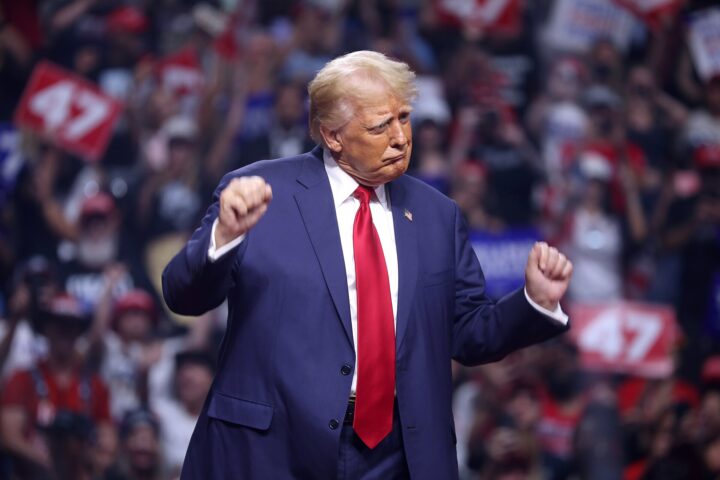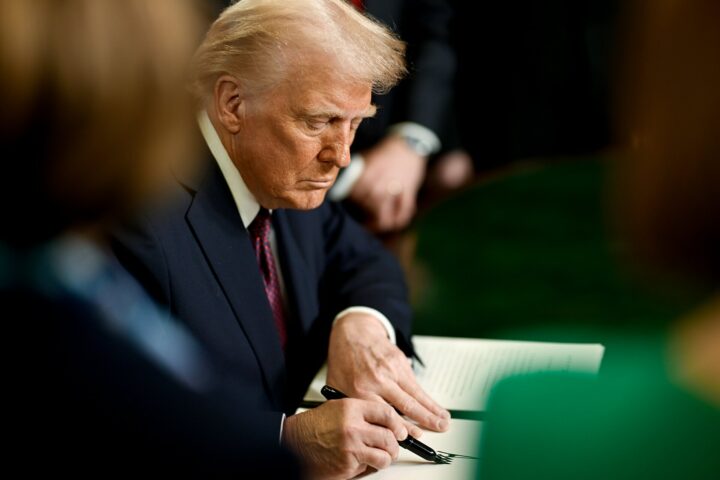
President Donald Trump threatened Friday to halt U.S. trade with countries running surpluses against the United States unless the Federal Reserve cuts interest rates, escalating his pressure on the central bank hours after a stronger-than-expected jobs report.
The Labor Department reported that employers added 162,000 jobs in August, nearly three times economists’ expectations, while the unemployment rate remained at 4.1 percent. June and July payroll figures were also revised upward by a combined 55,000 jobs, reported CNBC.
Trump seized on the report to argue that the strength of the U.S. economy should translate into lower borrowing costs.
“What I’m saying, very simply, is that we should be paying the lowest interest rate in the world,” Trump told reporters in the Oval Office.
Earlier Friday, Trump posted a lengthy message on Truth Social tying his demand for lower rates directly to trade policy:
Trump later expanded on the threat in the Oval Office, arguing that countries with large trade surpluses depend heavily on access to American consumers.
“We have a big deficit with a lot of countries that should never have been allowed to happen,” Trump said. “We have the right to take a so-called financially elite country that’s paying a much lower interest rate … Some countries are paying a half a point, and we’re paying four points, and yet we’re a much stronger credit than they are.”
“If we’re not going to be treated properly, we’re going to do that,” he continued. “And all we have to do to cut our trade deficit with the country is not trade with them.”
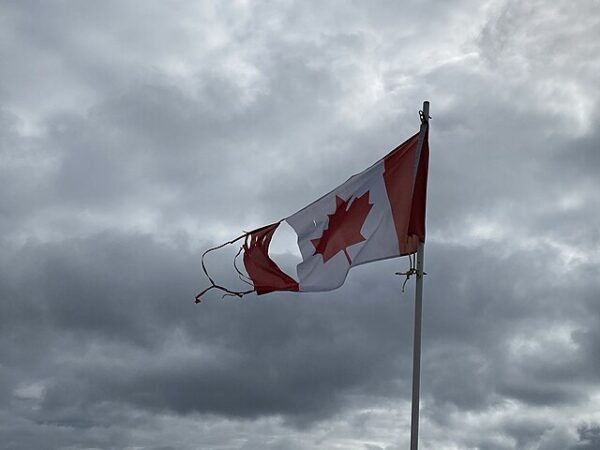
Trump pointed to Canada, already embroiled in a trade dispute with Washington. “If we were playing hardball, all we’d do is say we’re going to do no trading with Canada. If we did no trading with Canada, we’d save 90 billion dollars,” he said. He also argued that high rates are dramatically increasing federal borrowing costs: “Each point in interest in this country that we pay costs us $650 billion. We should be at 1 percent or a half a percent. We shouldn’t be at 4 percent.”
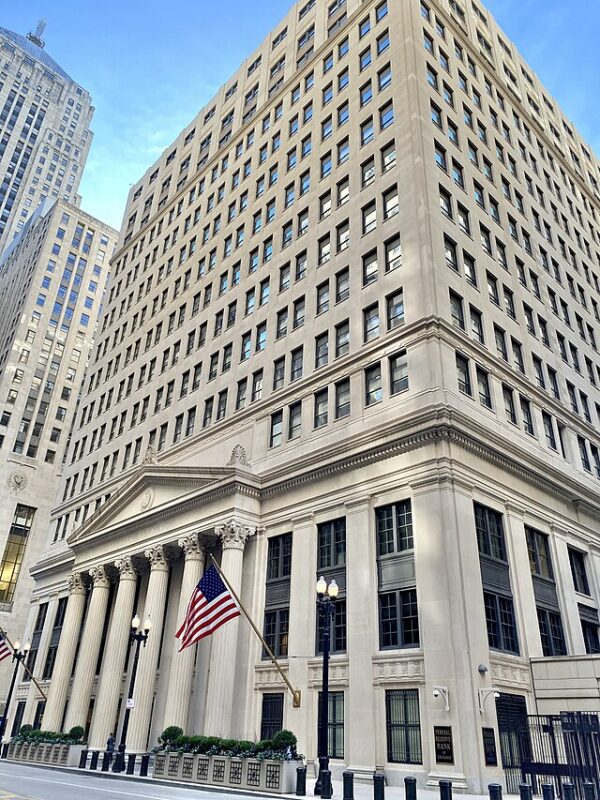
The threat comes as the Federal Reserve appears to be moving in the opposite direction. Fed Chairman Kevin Warsh said last week that inflation remains above the central bank’s 2 percent target and that policymakers must be prepared to act if price pressures do not ease. Warsh said short-term interest rates remain the Fed’s primary tool for pursuing price stability and maximum employment.
Friday’s strong employment report increased market expectations of a rate hike at the Fed’s Sept. 15-16 meeting. Futures markets put the probability of an increase at about 62 percent after the jobs report, up from roughly 55 percent beforehand, according to Reuters.
National Economic Council Director Kevin Hassett took a less confrontational approach Friday, telling CNBC that “the Fed will do what it wants to do. We respect their independence, but I think the argument for holding steady would be pretty strong.” Vice President JD Vance had called for lower rates a day earlier.
Trump’s reference to the Supreme Court concerned its February decision striking down his emergency tariffs under the International Emergency Economic Powers Act. The court held that IEEPA does not authorize the president to impose tariffs, though Trump has pointed to other presidential powers over international commerce as justification for additional trade restrictions.