President Donald Trump and Secretary of State Marco Rubio announced Friday what they called the largest oil agreement in history, saying the United States had secured majority control of more than 65 billion barrels of proven Venezuelan oil reserves at no cost to taxpayers.
Trump said the agreement was negotiated by Rubio and Defense Secretary Pete Hegseth with Venezuela’s interim president, Delcy Rodríguez, and private companies. He said it would more than double U.S. oil reserves and help lower gasoline prices.
Rubio called the agreement “a huge win for both the American and Venezuelan people.”
“It demonstrates how President Trump’s bold foreign policy is driving America First wins: securing stable reserves and low-cost oil in our Hemisphere and lowering gas prices here at home,” Rubio wrote on X. “For the Venezuelan people, this deal will bring nearly $100 billion in private investment, support thousands of high-paying jobs, and drive the reconstruction of Venezuela’s economy.”
This deal is a huge win for both the American and Venezuelan people.
It demonstrates how President Trump's bold foreign policy is driving America First wins: securing stable reserves and low-cost oil in our Hemisphere and lowering gas prices here at home.
For the Venezuelan… https://t.co/SMSRYGWmVb
— Secretary Marco Rubio (@SecRubio) August 28, 2026
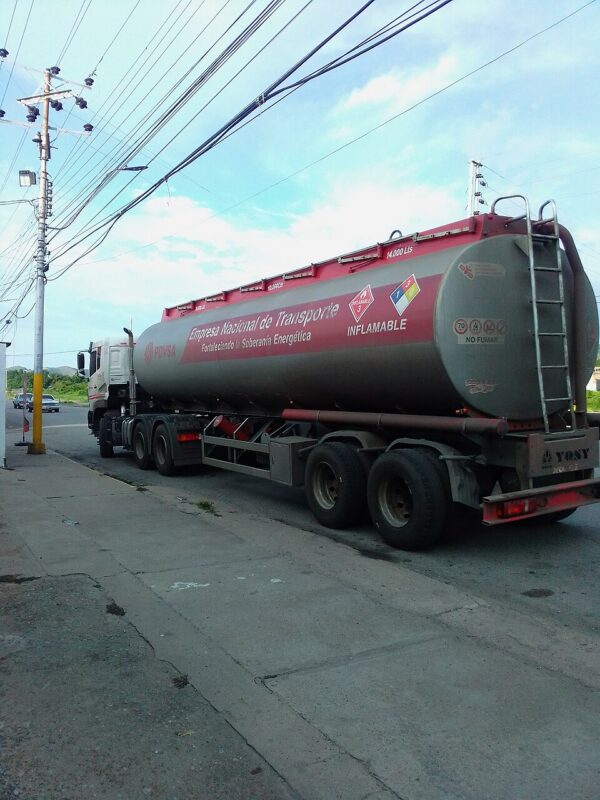
Public details remain limited. Officials briefed on the talks said the agreement covers 17 strategic oil fields and a new private joint venture, with the United States controlling roughly 55 percent of effective output through an ownership stake and the right to buy oil at cost. Rodríguez’s government reportedly granted 100-year development rights.
Trump also confirmed the new deal on Truth Social.
Officials said the oil could be used to refill the Strategic Petroleum Reserve and supply the U.S. military. Rodríguez said the project could generate about $209 billion in Venezuelan tax revenue.
The 65 billion barrels amount to roughly one-fifth of Venezuela’s estimated 303 billion barrels of proven reserves, the largest in the world.
U.S. proved crude oil and lease condensate reserves stood at about 46 billion barrels at the end of 2024, according to the Energy Information Administration. A 55 percent interest in 65 billion barrels would amount to more than 35 billion barrels, helping explain Trump’s claim that the deal would more than double U.S. oil reserves.
But contractual control of foreign production is not the same as booked domestic reserves, and the administration has not explained how the Venezuelan oil would be treated for legal or accounting purposes.
The agreement follows a major shift in U.S.-Venezuelan relations after a U.S. military operation in January captured former President Nicolás Maduro and brought him to the United States to face narcoterrorism and drug-trafficking charges.
Rodríguez, Maduro’s former vice president, became interim president. Washington has since licensed U.S. companies to expand operations in Venezuela and pushed for a larger American role in rebuilding the country’s oil sector.
The administration has not identified the companies involved, disclosed the specific fields, explained how U.S. majority control would be enforced or detailed oversight of the promised investment. Venezuela also faces major production hurdles. Much of its crude is extra-heavy and requires specialized equipment and refining, meaning a large-scale recovery would require billions of dollars and years of investment.
For now, Trump and Rubio are presenting the agreement as a major America First energy victory. Whether it delivers cheaper gasoline and a revival of Venezuela’s oil industry will depend on terms that have not yet been made public.