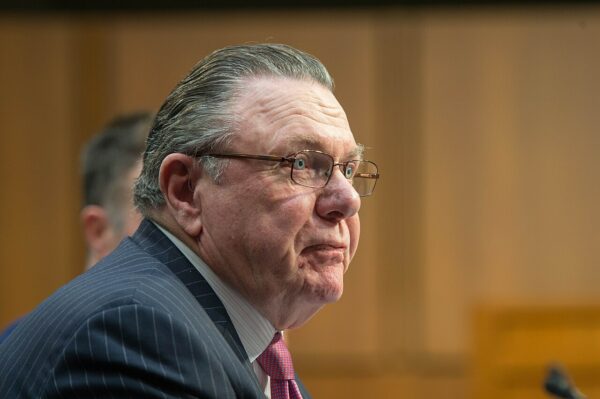
Retired Gen. Jack Keane warned Monday that President Donald Trump’s negotiations with Iran are failing to produce the desired results, arguing Tehran believes it has the upper hand and will only meet U.S. demands if forced to do so.
Keane, a Fox News senior strategic analyst, joined anchor Martha MacCallum, who asked whether continued economic pressure could eventually force Iran into an outcome favorable to the United States.
Keane pointed to four months of pressure surrounding the Strait of Hormuz, beginning with an April 7 ceasefire after Iran shut down the strategic waterway. A naval blockade followed on April 13, while negotiations now involve both reopening the Strait and Iran’s nuclear program.
“I think at times we underestimate where the Iranians really are in terms of where their head is at,” Keane said.
Keane argued that American officials tend to focus on Iran’s economic losses, inflation and currency value while assuming those pressures will eventually force Tehran to make concessions.
But he said Iran’s leadership views the situation differently.
“They absolutely believe, right now, that they have the upper hand,” Keane said, adding that while he does not personally believe that assessment, Iran’s own perception is what matters.
Keane said Tehran considers the Strait of Hormuz a “strategic asset” and will not willingly bargain it away. He also claimed previous agreements showed Iran could not be trusted to comply with concessions.
“They will not give up the Strait of Hormuz unless we take it back by force,” Keane said. “No amount of economic pressure on them, I think, will bend them to do that.”
Keane also issued a warning about the approaching midterm elections, arguing Iran could become increasingly aggressive both diplomatically and violently.
He said Tehran’s demands are becoming more extreme, describing them as “almost asking us to surrender.”
Keane predicted Iran would seek to create a volatile situation as the elections approach in an effort to make the Trump administration appear unable to properly manage the war and potentially influence the midterms.
“I think their pathway forward is: very aggressive diplomatically, and they’re going to get very aggressive violently as well,” he said.
Keane stressed that Trump still has significant military options available and could launch major action against Iran if he chooses.
“I do believe, in my own mind, that the only way Iran will meet our demands is if we force them,” he said.
Asked about concerns over U.S. military capabilities and missile stockpiles, Keane said he was “absolutely confident” America has greater military capability in the region now than when the war began Feb. 28.
He said the U.S. has moved additional assets into the region while strengthening both offensive and defensive capabilities.
Keane acknowledged challenges surrounding replenishment of weapons stockpiles but distinguished that issue from America’s current ability to fight.
“In terms of being able to prosecute a war with offensive weapons, and to be able to defend against the Iranians, we can do that quite effectively,” Keane said.
MacCallum concluded by noting Iran’s demands include withdrawing U.S. military forces and bases from the region, something she said has long been among Tehran’s goals.
[READ MORE: Ocasio-Cortez Says She Hasn’t Ruled Out Higher Office, Announces Decision to Freeze Her Eggs]