GOP Lawmakers Say Constitutional Amendment Needed After Supreme Court Birthright Citizenship Ruling
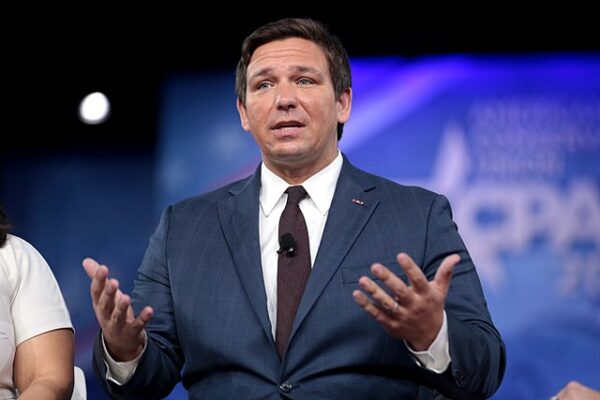
[Gage Skidmore from Peoria, AZ, United States of America, CC BY-SA 2.0 , via Wikimedia Commons]
Several prominent Republicans with legal backgrounds broke with President Donald Trump on Tuesday following the Supreme Court’s ruling on birthright citizenship, arguing that Congress alone cannot overturn the court’s interpretation of the Constitution and that a constitutional amendment would be required.
The Supreme Court ruled 6-3 that the Citizenship Clause of the 14th Amendment guarantees citizenship to nearly all children born on U.S. soil, including those whose parents are in the United States unlawfully.
The decision struck down an executive order Trump signed on the first day of his second term that sought to limit birthright citizenship to children with at least one parent who is either a U.S. citizen or a lawful permanent resident.
Following the ruling, Trump indicated he would shift his efforts to Congress rather than pursue a constitutional amendment.
“No long and unwieldy Constitutional Amendment is necessary!” Trump wrote on Truth Social. “Congress should start TODAY to work on ending expensive and unfair to our Country, Birthright Citizenship. They will have my Complete and Total Support!”
But several Republicans with legal experience publicly disagreed with that assessment, arguing the Supreme Court’s ruling interpreted the Constitution itself rather than a federal statute, leaving Congress without the authority to reverse it through ordinary legislation.
Florida Gov. Ron DeSantis, a graduate of Harvard Law School, said the ruling represented a substantive constitutional decision rather than a procedural one.
In a statement posted on social media, DeSantis wrote that the court had concluded the 14th Amendment requires citizenship for individuals born in the United States, including children born to parents who are unlawfully present or participating in what critics call birth tourism.
“Will need either a constitutional amendment or a future court to overrule this,” DeSantis wrote. “Anyway you slice it, the decision is a major defeat.”
Sen. Mike Lee, R-Utah, who previously served as a law clerk for Supreme Court Justice Samuel Alito, reached a similar conclusion.
“We’re going to need a constitutional amendment,” Lee wrote on the social platform X.
Missouri Sen. Eric Schmitt, a former alderman and the state’s former attorney general, also strongly criticized the ruling and argued Congress now has a responsibility to pursue a constitutional amendment.
Schmitt called the Supreme Court’s decision “wrong, dangerous, and disastrous for American sovereignty and the American people.”
In a lengthy statement posted on X, Schmitt argued that while Congress can amend federal laws when the Supreme Court misinterprets a statute, the process is different when the court interprets the Constitution itself.
“In the wake of an erroneous Supreme Court ruling like this one, Congress has a duty to examine the Constitution’s text, the historical record, and the policy consequences,” Schmitt wrote.
He explained that the Constitution provides a mechanism for correcting such decisions through the amendment process, which requires approval by two-thirds of both the House and Senate followed by ratification by three-quarters of the states.
“Ordinary legislation cannot repair the damage,” Schmitt wrote. “A constitutional amendment is now required. Accordingly, I will be announcing a forthcoming constitutional amendment to restore the sacred bond between American citizens and their government.”
Schmitt also warned that birthright citizenship was never intended to function as what he described as a “suicide pact,” adding that, if left “unaddressed,” the Supreme Court’s decision would “destroy the republic.”
The ruling split the court’s conservative bloc.
Chief Justice John Roberts and Justice Amy Coney Barrett joined the court’s three liberal justices in the majority.
Justice Brett Kavanaugh disagreed with the majority’s reasoning but voted to block Trump’s executive order under a federal law enacted by Congress in 1940 that reflects the longstanding understanding of birthright citizenship.
Justices Samuel Alito, Clarence Thomas and Neil Gorsuch dissented.
Alito described the ruling as “one of the most important decisions in the history of the Court” and argued the majority had incorrectly interpreted the 14th Amendment.
Trump made birthright citizenship a priority on the first day of his second term by signing an executive order requiring that a child born in the United States have at least one parent who is either a U.S. citizen or a lawful permanent resident to receive automatic citizenship.
The order was quickly challenged in court by several Democratic-led states, preventing it from taking effect before the Supreme Court ultimately ruled against the administration.
[READ MORE:Trump Demands Lower Gas Prices, Warns Retailers Against ‘Totally Illegal’ Price Gouging]