Federal agents descended on a multimillion-dollar Newport Coast estate before dawn Wednesday, arresting an Iranian-American businessman accused of helping supply U.S.-origin computer technology to Iran’s military and nuclear programs in violation of federal sanctions.
The dramatic operation unfolded at the sprawling Newport Beach-area residence of Jamshid Ghomi, 63, who was taken into custody after a coordinated raid led by federal authorities. Ghomi has been charged with conspiracy to violate the International Emergency Economic Powers Act and was expected to appear in federal court in Santa Ana later in the day.
According to prosecutors, Ghomi, a dual citizen of Iran and the United States, spent years facilitating the transfer of American computer-networking equipment to Iran despite sanctions intended to restrict such transactions. Authorities allege he earned millions of dollars through the operation while concealing the true nature of the business through a network of intermediaries and front companies.
“Ghomi is accused of aiding our declared enemies by selling U.S.-origin computer networking parts to Iran and earning millions of dollars in violation of U.S. sanction laws,” said U.S. Attorney Bill Essayli.
Essayli added that prosecutors intend to pursue both criminal penalties and asset forfeiture, including Ghomi’s Newport Coast mansion, which authorities estimate is worth approximately $35 million.
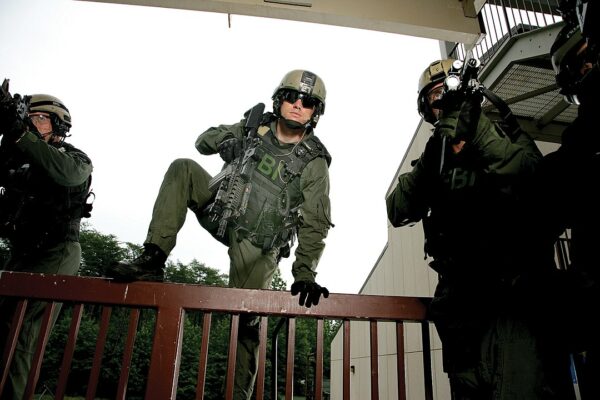
The raid itself drew significant attention in the upscale coastal community. Dozens of federal agents outfitted in tactical gear assembled at a nearby location before moving in convoy to the gated property. Once there, agents surrounded the estate and called for occupants to exit.
According to reports from the scene, Ghomi’s wife and two adult sons were escorted from the residence as authorities secured the property. Additional agents carrying evidence boxes and power tools entered the home, while an interpreter arrived to assist with interviews.
After being questioned, Ghomi eventually emerged from the residence and was placed into custody before being transported away in a government vehicle.
The allegations against him extend beyond sanctions violations. Federal investigators are also examining potential money laundering, tax evasion, and other offenses.
According to prosecutors, Ghomi’s business generated more than $10 million annually in sales, while he allegedly reported income of no more than $20,000 to the Internal Revenue Service.
Authorities claim that for more than a decade, Ghomi used a Tehran-based company he founded, Faraz Pardaz Rayaneh, to acquire American networking equipment for customers in Iran. Investigators allege he arranged shipments totaling more than 250 tons of controlled technology and used personal online accounts, including eBay and PayPal, to facilitate additional purchases.
Federal authorities say Ghomi negotiated directly with suppliers in Minnesota and Nebraska before routing equipment through a front company in the United Arab Emirates and ultimately into Iran. Prosecutors further allege that freight forwarders and intermediaries based in Dubai were used to obscure Iran’s role as the final destination.
Investigators claim internal communications among Ghomi and his associates referred to Iran as the “Motherland” while discussing procurement activities.
According to prosecutors, the technology reached hundreds of Iranian companies and government-linked entities, many of which were already subject to U.S. sanctions. Authorities allege that a smaller but significant portion of the equipment ultimately supported Iran’s military and nuclear establishment.
The case comes as the United States remains engaged in conflict with Iran, underscoring the government’s focus on enforcing sanctions aimed at restricting the flow of sensitive technology.
“Our nation’s laws prohibiting doing business with one of the world’s largest state sponsors of terrorism must be enforced and obeyed,” Essayli said.
While the allegations remain unproven in court, the case highlights the lengths federal authorities say some individuals are willing to go to evade sanctions—and the continuing concerns surrounding the transfer of American technology into regions tied to military and nuclear activities.
[READ MORE: Trump Slams Democratic Senate Hopefuls Platner and Talarico in New Podcast Interview]