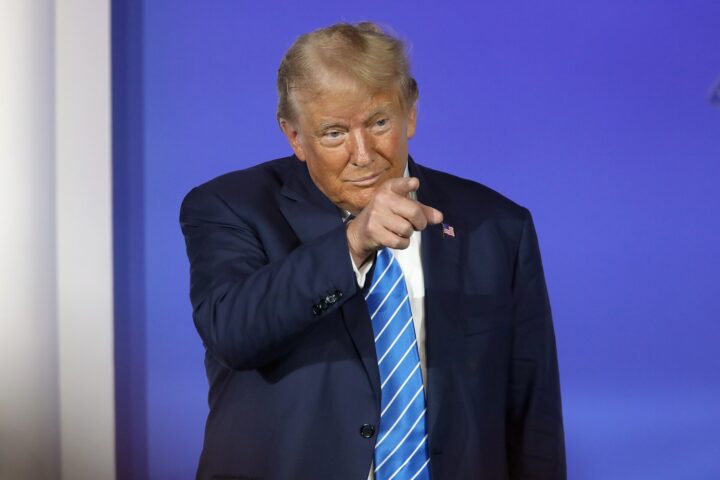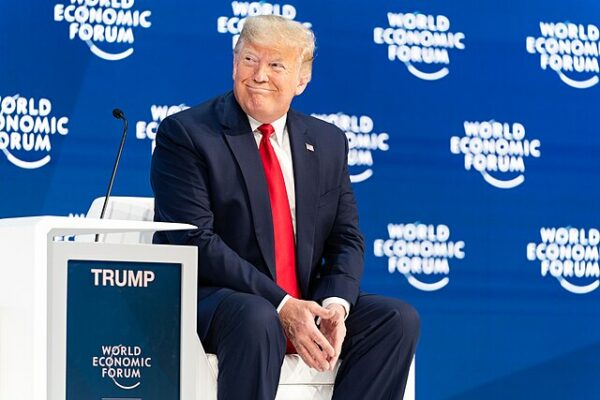
President Donald Trump signaled a surprising potential shift in U.S.-Iran relations Wednesday, suggesting the two longtime adversaries could explore a “joint venture” to manage and secure the vital Strait of Hormuz—just hours after announcing a temporary ceasefire.
The remarks came during a brief interview with Jonathan Karl, as relayed on Good Morning America by anchor George Stephanopoulos. According to Karl, the president raised the idea when pressed on whether Iran might be allowed to impose tolls on ships passing through the strategically critical waterway.
“We’re thinking of doing it as a joint venture,” Trump said. “It’s a way of securing it – also securing it from lots of other people.” He went on to describe the concept as “a beautiful thing,” signaling optimism about a possible arrangement that would have seemed unlikely only days earlier.
The Strait of Hormuz remains one of the most important shipping lanes in the world, carrying a significant portion of global oil supply. Any discussion of shared oversight between Washington and Tehran marks a notable development, particularly given the long-standing tensions between the two nations.
The proposal follows Trump’s announcement of a two-week ceasefire, a move that has raised expectations of rapid diplomatic progress. The president told Karl that formal peace talks are expected to begin Friday and indicated confidence that negotiations could move quickly.
Still, even as he floated the possibility of economic coordination in the region, Trump made clear that certain lines would not be crossed. Chief among them is Iran’s nuclear program.
“There won’t be any enrichment,” Trump said, reiterating a central U.S. demand that has consistently been a sticking point in negotiations. Iran, for its part, has repeatedly insisted it will not give up what it views as its right to enrichment, underscoring the challenges that lie ahead.
The president also confirmed that U.S. military forces would remain in the region, signaling that any diplomatic opening would be accompanied by a continued security presence. At the same time, he revealed that China has played a role in engaging with Iran, adding another layer of complexity to an already delicate situation.
Details surrounding the proposed joint venture remain unclear. Questions about whether tolls would be imposed, how revenues might be shared, and who would ultimately bear responsibility for security have yet to be answered.
While the idea of cooperation may offer a path toward stability in one of the world’s most volatile regions, it also raises difficult questions. Partnerships between adversaries are rarely simple, and any agreement involving such a critical global chokepoint would require careful scrutiny.
For now, the administration appears to be pursuing a dual-track approach—pairing diplomacy with continued military readiness. Whether that balance leads to lasting progress or simply postpones deeper tensions remains to be seen.
As talks loom, the stakes are clear: securing global energy routes, managing regional threats, and navigating a fragile peace that, despite hopeful rhetoric, may prove far more complicated in practice.
[READ MORE: Trump Says He Will Slap Tariffs On Anyone Supplying Iran With Weapons]