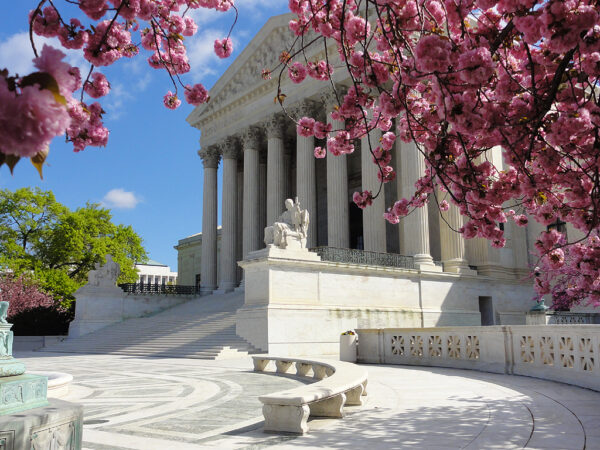
The Supreme Court on Monday moved to effectively close the door on the long-running contempt of Congress case against Steve Bannon, a longtime ally of President Donald Trump, sending the matter back to a lower court where it is expected to be dismissed.
Rather than taking up Bannon’s appeal directly, the justices chose a narrower route. They declined to hear arguments on his challenge to a 2022 conviction tied to his refusal to comply with a subpoena issued by the House committee investigating the Jan. 6, 2021, Capitol attack. Instead, the Court vacated a lower court’s ruling and remanded the case to the trial judge, a step that clears the way for the proceedings to be formally dismissed.
That outcome aligns with a move by the Justice Department earlier this year. In February, federal prosecutors requested that the two-count indictment against Bannon—filed nearly five years ago—be thrown out. The department indicated that continuing the case was no longer warranted, signaling a shift in how it views the prosecution.
“The government has determined in its prosecutorial discretion that dismissal of this criminal case is in the interests of justice,” Solicitor General D. John Sauer told the justices in a filing last month.
Bannon had previously been convicted by a federal jury in Washington, D.C., on two counts of contempt of Congress after he declined to appear for a deposition and refused to provide documents requested by the Jan. 6 committee. The case became one of the most high-profile legal battles stemming from the investigation, highlighting the broader clash between congressional authority and executive branch claims.
Following his conviction, Bannon was sentenced to four months in prison. However, U.S. District Judge Carl Nichols allowed him to delay serving that sentence for roughly two years while his appeal worked its way through the courts. Bannon ultimately served the time in 2024, even as the legal fight continued.
Central to Bannon’s defense was his claim that he had relied on advice from his attorney, who recommended holding off on compliance with the committee’s demands until questions surrounding executive privilege were resolved. His legal team has argued that this context should have weighed more heavily in assessing his actions.
In filings to the Supreme Court, Bannon’s attorney, Michael Buschbacher, went further, asserting that the prosecution itself was flawed. “The government acknowledges that Petitioner’s criminal prosecution was unjust,” he told the justices.
The case also fits into a broader pattern involving Trump-era officials and the fallout from the Jan. 6 investigation. Bannon was the second adviser to serve prison time on similar charges. Peter Navarro, a former White House trade adviser, was likewise convicted on two counts of contempt of Congress and served a four-month sentence. Navarro’s appeal remains ongoing, though the Justice Department has stepped back from defending that case as well.
While the Supreme Court’s action does not directly weigh in on the underlying dispute, it effectively brings an end to a yearslong legal saga that carried significant political overtones. The decision to step aside—and the government’s choice to abandon the prosecution—may leave lingering questions about how such cases should be handled in the future, particularly when they intersect with high-stakes political conflicts.
[READ MORE: Robinhood, BNY To Build Trump Account Apps]