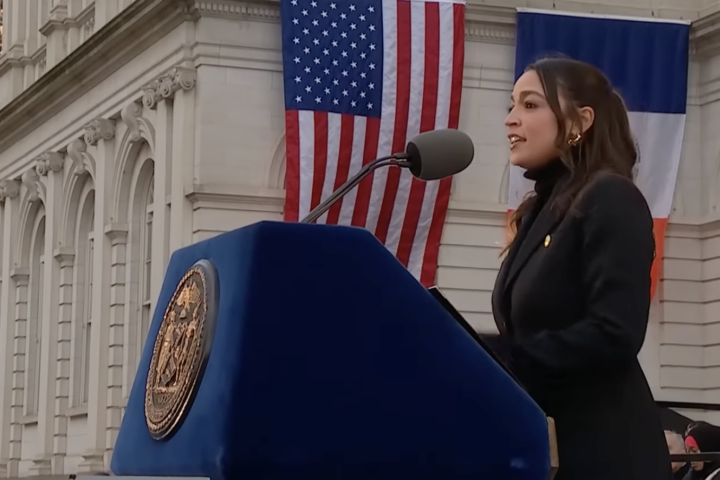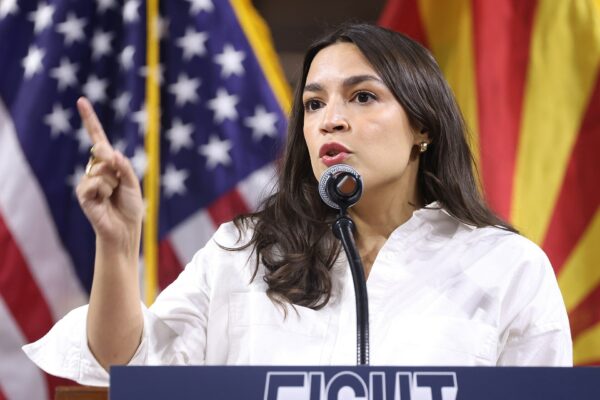
Representative Alexandria Ocasio-Cortez traded sharp barbs with commentator Ana Kasparian over the weekend, in a public dispute that quickly escalated from policy disagreement into personal attacks—highlighting deep fractures on the left over U.S. support for Israel and the broader conflict.
The exchange began after Ocasio-Cortez condemned what she described as a foiled assassination plot targeting pro-Palestinian activist Nerdeen Kiswani. In a social media post, the congresswoman called the alleged plot “a reprehensible act of political violence,” praising law enforcement for intervening and expressing relief that Kiswani was unharmed.
Kasparian responded with a pointed critique, accusing Ocasio-Cortez of hypocrisy over U.S. aid to Israel. “You should vote to send Israel more money for weapons!” she wrote, prompting an immediate and forceful reply.
“I never have,” Ocasio-Cortez shot back, accusing Kasparian of spreading falsehoods and suggesting the media personality relies on controversy rather than accuracy. The back-and-forth quickly drew attention online, with users attempting to sort out the competing claims.
According to a fact-check generated by Grok, Ocasio-Cortez has not voted in favor of weapons sales or major military aid packages to Israel. The summary cited her opposition to the 2024 Israel Security Supplemental and noted her support for measures aimed at blocking proposed foreign military sales. It also pointed out that while she voted against broader defense legislation that included funding for systems like Iron Dome, she did not cast affirmative votes approving such aid.
Kasparian, however, doubled down, arguing that procedural votes still amount to support in practice. She contended that opposing certain legislative efforts to restrict arms transfers effectively enables continued U.S. funding, and she tied that argument to her broader criticism of Israel’s conduct in the conflict.
In a lengthy follow-up, Kasparian also referenced Ocasio-Cortez’s past vote on a 2021 funding measure, noting that the congresswoman initially opposed the bill before switching to a “present” vote under pressure. She framed that decision as inconsistent, while also criticizing U.S. financial support for Israel at a time when, she argued, domestic economic conditions were strained.
The exchange underscores a growing divide within progressive circles, where disagreements over foreign policy—and especially military aid—have become increasingly sharp. While both figures position themselves as critics of violence, their dispute reveals how even shared concerns can lead to dramatically different conclusions about policy.
Kasparian’s broader record has also drawn controversy. She has faced criticism in the past for inflammatory rhetoric, including comments about U.S. lawmakers and Israel that some have characterized as crossing a line. More recently, she has aligned with voices such as Tucker Carlson in opposing aspects of U.S. and Israeli foreign policy.
At its core, the clash reflects a deeper tension: how to reconcile opposition to violence with ongoing debates over military support and geopolitical alliances. As rhetoric intensifies, the conversation risks shifting away from substance toward spectacle—leaving unresolved the harder questions about how conflicts abroad are funded, fought, and ultimately brought to an end.
[READ MORE: Trump Jokes with Fox Host While Addressing Iran Conflict, Raises Concerns Over Civilian Silence]