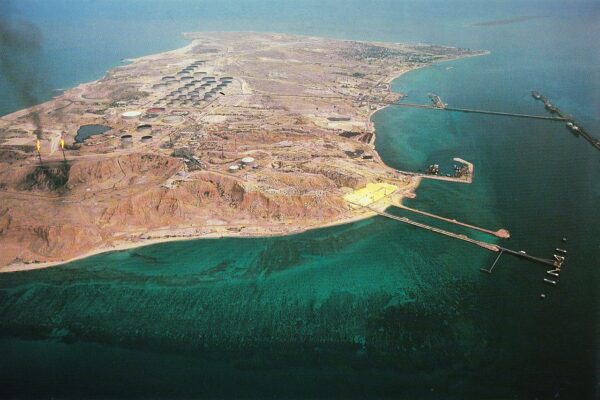
New reporting from CNN suggests Iran is ramping up defenses on Kharg Island amid rising concerns that the United States could be preparing for a possible operation targeting the strategically vital location.
Pentagon correspondent Natasha Bertrand summarized intelligence findings indicating that Iran has been laying traps, moving additional personnel, and reinforcing air defenses on the island in recent weeks. According to individuals familiar with U.S. intelligence reporting, these moves appear aimed at preparing for a potential American effort to take control of the site.
Kharg Island, a key hub for Iran’s energy production, has increasingly drawn attention as tensions escalate. The buildup described in the report points to a scenario in which both sides are anticipating a possible confrontation, even if no official decision has been announced.
Bertrand also noted that U.S. allies in the Gulf are expressing serious concerns about the potential cost of such an operation. According to her reporting, regional partners have warned of significant American casualties if the U.S. proceeds and have advised against moving forward.
Those warnings come as speculation grows in Washington that military planning may already be underway. Alex Ward, a national security reporter for the Wall Street Journal, pointed to comments from at least three congressional Republicans—including leaders of the House and Senate Armed Services Committees—who have strongly hinted that a ground operation involving Iran could be imminent or even in early stages.
The possibility of such a move raises difficult questions about both feasibility and long-term consequences. Retired Brigadier General Steve Anderson, speaking with CNN anchor Sara Sidner, described the scenario as highly complex and fraught with risk.
Anderson noted that Kharg Island is home to an estimated 30,000 to 40,000 Iranians, immediately complicating any military action. Beyond that, he warned of environmental and tactical challenges, including weather conditions, the likelihood of booby traps, and the presence of mines.
“They know we’re coming,” Anderson said, suggesting that Iranian forces would not be caught off guard. He also pointed to Iran’s ability to deploy asymmetric tactics, including drones and missiles, as well as the island’s proximity—roughly 15 miles—to the Iranian mainland, placing U.S. forces within range of additional attacks, including artillery.
While Anderson acknowledged that U.S. forces could likely seize the island, he raised a more difficult question: what comes next. Holding the territory, he argued, could prove far more challenging than capturing it in the first place.
“That’s going to be the long pole in the tent,” he said, underscoring the potential for a prolonged and complicated engagement.
The emerging picture is one of mounting tension, with military preparations and political signals converging. Yet even as discussions intensify, the warnings from allies and military experts alike suggest that any decision to proceed would carry significant risks—not just in the initial operation, but in the uncertain path that could follow.
[READ MORE: Trump Rejects Musk’s Offer To Pay TSA Agents]