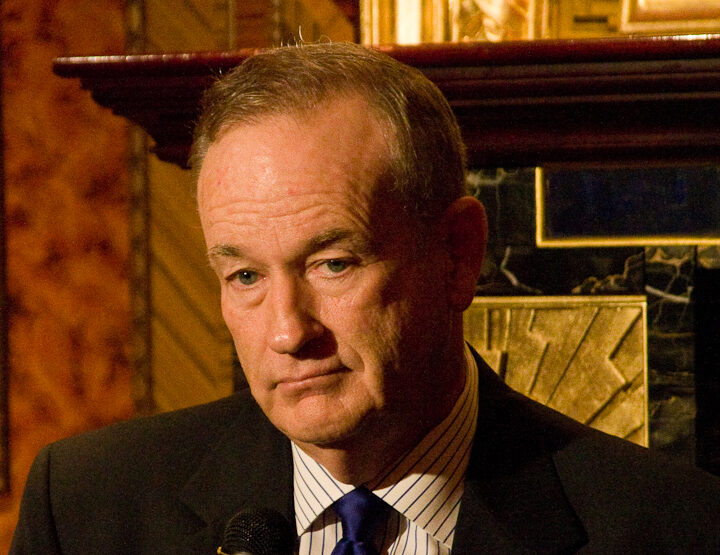
Veteran commentator Bill O’Reilly offered a sobering assessment of the Trump administration’s options in Iran, arguing that expectations of quickly toppling the regime are unrealistic and that a negotiated settlement may ultimately be the only viable path forward.
Speaking with NewsNation’s Leland Vittert, O’Reilly pushed back on the idea that the U.S. could decisively reshape Iran’s leadership in the near term. His remarks came after Vittert raised a pointed question about the risks of negotiating with hostile regimes, asking whether history offers any examples where “making a deal with evil worked out.”
O’Reilly acknowledged that such deals have occurred, though he was careful not to frame them as clear victories. Instead, he pointed to pre-World War II agreements as examples of efforts that delayed larger conflicts rather than resolved them outright.
“There were a lot of deals made before World War II that postponed the Armageddon,” O’Reilly said, referencing British Prime Minister Neville Chamberlain’s controversial diplomacy. When Vittert pressed him on whether the Munich Agreement could be considered a success, O’Reilly rejected that characterization but emphasized its role in delaying armed conflict.
“The word success never entered my mind,” he said. “It postponed the armed conflict.”
From that historical lens, O’Reilly argued that a similar dynamic may now be shaping the Trump administration’s thinking. According to him, it is becoming increasingly clear that removing Iran’s leadership would require a level of military commitment—specifically, deploying thousands of U.S. ground troops—that is simply not on the table.
“It is becoming apparent to the Trump administration that they are not gonna be able to change the regime unless you throw 10,000 ground troops into Iran, which is never going to happen,” O’Reilly said.
Instead, he suggested the administration may be moving toward a deal that would include international inspections to ensure Iran is not enriching uranium, restrictions on ballistic missile development, and other concessions. In exchange, economic sanctions could be eased.
O’Reilly was candid about the uncertainties surrounding such an approach, noting that even the structure of Iran’s leadership remains unclear. “We don’t even know what it is now, or who’s talking. We have no idea who the leadership is,” he said, highlighting the challenges inherent in negotiating under such conditions.
Vittert remained skeptical, raising concerns that any agreement could embolden a regime that has long expressed hostility toward the United States. He questioned whether trusting such commitments would simply allow Iran to regroup and regain strength.
O’Reilly responded by outlining what he described as the underlying hope behind a potential deal: that internal instability within Iran could lead to broader change from within. He suggested that if a ceasefire were reached and tensions in the Strait of Hormuz eased, it might create conditions for the Iranian people to push back against a weakened government.
“The hope is that the Iranian regime is in such disarray that… the Persians will rise up and throw out this weakened government,” he said.
At the same time, O’Reilly cautioned against blind trust in any administration’s decisions, including Trump’s. He urged viewers to remain skeptical and to evaluate the situation based on observable realities rather than rhetoric.
“You have to be skeptical of every single administration,” he said, adding that the current outlook for Iran appears bleak across multiple fronts.
While the conversation reflected a tough, clear-eyed perspective often associated with conservative analysis, it also hinted at a deeper tension: even those wary of adversarial regimes are grappling with the limits of military power. As O’Reilly’s comments suggest, the path forward may involve choices that are less about decisive victories and more about managing risks in an increasingly uncertain conflict.
[READ MORE: Trump Names Top Tech Leaders To Advisory Council]