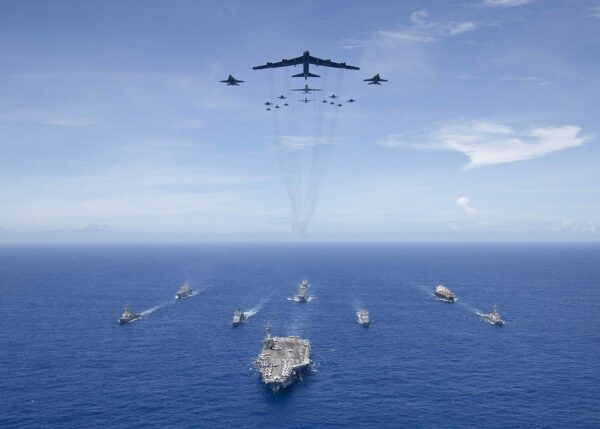
The U.S. Navy’s largest and most advanced aircraft carrier, the USS Gerald R. Ford, arrived Monday at Souda Bay in Crete, Greece, for repairs after a fire forced it to leave the Middle East, highlighting both the strain of extended deployments and the unpredictable costs of a growing conflict.
Photos showed the massive warship docking at the naval base, a familiar stop for the carrier, which had previously taken on food, fuel, and ammunition there in February. This time, however, the visit comes under far more serious circumstances. The vessel sustained damage following a March 12 fire in its laundry room while supporting U.S. and Israeli operations against Iran.
The Navy has emphasized that despite the incident, the carrier “remains fully mission capable.” Officials said the stop in Crete will allow for assessments, repairs, and resupply before the ship continues its deployment.
Still, the temporary withdrawal of the Ford from the region has immediate implications. With the carrier now out of the Middle East, the United States is left with only one aircraft carrier actively supporting the war effort against Iran—unless another vessel is dispatched to fill the gap. That shift underscores how even non-combat incidents can quickly alter the balance of military presence in a volatile region.
The Ford has played a central role in the administration’s campaign, operating alongside the USS Abraham Lincoln and carrying thousands of service members and dozens of aircraft involved in a sustained air campaign. Its absence, even if temporary, leaves a noticeable void.
The deployment itself has been long and demanding. The carrier has been at sea for nearly nine months since departing Norfolk, Virginia, last June. Initially sent to the European theater, it was later redirected to the Caribbean during a U.S. military buildup near Venezuela—an operation that led to the ouster of Venezuelan leader Nicolas Maduro, as well as strikes on suspected drug-smuggling vessels and the interception of sanctioned tankers.
From there, the Ford was sent to the Persian Gulf region in early February as tensions with Iran escalated into open conflict. The ship’s journey reflects the wide-ranging demands placed on U.S. forces, often shifting rapidly from one hotspot to another.
But the extended deployment has not come without issues. In addition to the laundry room fire—which injured two sailors and damaged roughly 100 sleeping areas—the carrier has reportedly faced ongoing mechanical challenges, including problems with its toilet system. These incidents, while not directly tied to combat, have added strain on a crew already operating under intense conditions.
Some lawmakers have raised concerns. Senator Mark Warner of Virginia described the fire as “incredibly concerning,” pointing to the toll of keeping the ship and its crew deployed for such an extended period. He argued that the Ford’s sailors have been pushed to their limits amid the broader military strategy.
The situation serves as a reminder that even the most advanced military hardware is not immune to wear, accidents, or the pressures of prolonged operations. While officials maintain confidence in the ship’s capabilities, the need for repairs—and the gap left behind—offers a glimpse into the challenges of sustaining a far-reaching military campaign.
As the Ford undergoes maintenance in Greece, its temporary absence raises a broader question: how long can such a pace be maintained, and at what cost to the men and women tasked with carrying it out?
[READ MORE: California Sues To Stop Oil Pipeline]