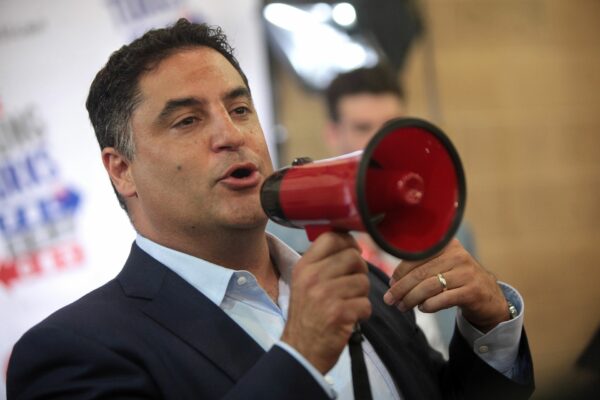
Cenk Uygur, the outspoken left-wing host of The Young Turks, ignited widespread criticism over the weekend after publicly declaring that he no longer believes the official account of the September 11, 2001, terrorist attacks that killed nearly 3,000 Americans.
Uygur took to social media Friday to announce what he described as a personal shift in thinking, writing, “I no longer believe official 9/11 story. Two paper passports did not burn and were found on the rubble but it was so hot WTC7 burned down across the street. Nonsense. It’s time to look for who gained from 9/11. Our government doesn’t work for us. They’ve been lying whole time.”
His remarks quickly drew attention across the political spectrum. Uygur followed up with additional posts, including one linking what he called his 9/11 “conversion” to the recent release of Epstein files, and another defending himself against critics.
In one post, Uygur addressed what he described as his “normie friends” who would be outraged by his comments. He argued that Americans have been “brainwashed by corporate media” and claimed that labeling alternative explanations as “conspiracy theories” is a tactic used to discourage citizens from questioning the government.
“Why am I questioning this now? That’s obvious,” Uygur wrote. “We just found out our government was lying to us for decades about a child rape ring inside America. And ‘our’ government protected the predators instead of American children. You’d have to be an idiot to trust the US government now.”
The comments triggered swift responses from journalists, fact-checkers and elected officials. Many accused Uygur of promoting baseless conspiracy theories and suggested he was courting controversy for attention.
Shayan Sardarizadeh of BBC Verify highlighted another of Uygur’s posts defending conspiracy claims and cautioned against conflating legitimate scrutiny of power with unfounded speculation.
“Holding power to account and asking difficult questions of governments are both vital in free democracies,” Sardarizadeh wrote. “They are completely different to baseless conspiracy theories that merely help the powerful to delegitimise real accountability and lead some down a radical path.”
Holding power to account and asking difficult questions of governments are both vital in free democracies.
They are completely different to baseless conspiracy theories that merely help the powerful to delegitimise real accountability and lead some down a radical path. pic.twitter.com/c6gTvW81qR
— Shayan Sardarizadeh (@Shayan86) February 15, 2026
Derek Thompson of The Atlantic weighed in as well, expressing concern about what he described as a declining social stigma around embracing far-fetched claims.
I worry that the social penalty of announcing that you believe in nonsense is going down.
It’s not so much that people are more conspiratorial than ever. That’s clearly not true. Believers in make-believe are an ancient tribe.
It’s more like … a falling social cost to… https://t.co/Kwzc3RYkaf
— Derek Thompson (@DKThomp) February 13, 2026
“I worry that the social penalty of announcing that you believe in nonsense is going down,” Thompson wrote. He added that it is not necessarily that more people believe conspiracies than in the past, but rather that there is a “falling social cost to high-status folks saying insane” things while shielding themselves behind attacks on “the mainstream media” or “corporate media.”
Jonah Goldberg of The Dispatch offered a more pointed rebuke, dismissing Uygur’s comments as “pathetic” and mocking the idea that his change of view would meaningfully sway public opinion.
Moderate House Republican Don Bacon of Nebraska also chimed in, quipping on social media, “Crank Uygur is officially in the tinfoil hat club.”
Uygur’s remarks mark a striking moment for a media figure long associated with progressive politics, now openly questioning one of the most extensively investigated terrorist attacks in U.S. history. The episode underscores how debates over media trust, government credibility and conspiracy claims continue to roil both sides of the political divide more than two decades after 9/11.