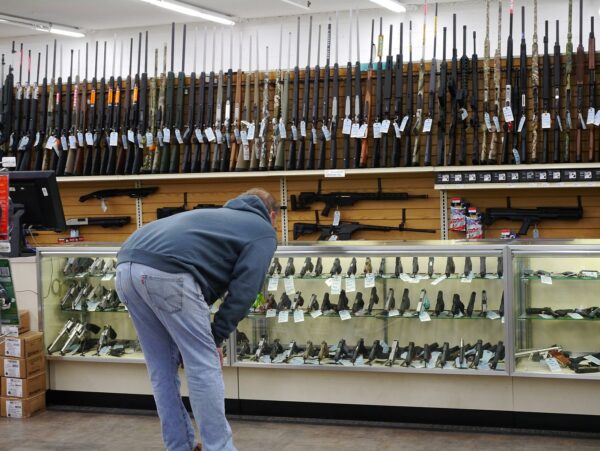
Hundreds of thousands of Canadian gun owners could face serious criminal penalties under a federal gun buyback scheme that the government insists is “voluntary,” even as failure to comply could result in prison sentences of up to five years. The sweeping program, first launched in 2020, is now exposing deep cracks in Canada’s bureaucratic system and fueling resistance from provinces, gun rights groups, and firearms owners.
Since May 2020, the Canadian government has pursued what it calls an “assault-style firearms compensation program,” aimed at trading government cash for firearms newly classified as prohibited. Under the rules, Canadians who possess one of the banned firearms must turn it in, permanently deactivate it, or otherwise dispose of it by October 2026. Those who do not comply risk criminal prosecution and possible prison time.
Gun rights advocates argue the program is anything but voluntary and say it unfairly targets law-abiding citizens while doing little to address crime. Blair Hagen of Canada’s National Firearms Association said the government is struggling simply to carry out its plan.
“We’re finding that they’re running into a lot of compliance issues,” Hagen said. “They have no idea where [the guns are] or who has them.”
The scope of the ban has already forced the federal government to extend its amnesty period three times, with the current deadline set for October 2026. The original ban was enacted through an order in council under then–Prime Minister Justin Trudeau, a mechanism Hagen described as allowing firearms to be banned without legislation being debated or passed in Parliament.
Despite this, the government continues to describe participation in the buyback as optional, while making clear that obedience to the ban itself is mandatory. Its own website states that gun owners who fail to comply before the amnesty expires risk criminal liability for possessing prohibited firearms.
Justin Davis, public affairs director for the National Rifle Association, said the government’s language defies common sense.
“If the option is either turn them in or you’re going to jail, I would not consider that voluntary,” Davis said.
Prime Minister Mark Carney has rejected claims that the program amounts to confiscation, saying instead it is a voluntary return of firearms for compensation. He has also insisted the ban does not affect hunting rifles or sports shooting firearms, focusing only on what the government labels “assault rifles.”
However, critics point out that the ban includes a specific carve-out for Indigenous peoples who use prohibited firearms for hunting, allowing them to continue using those guns temporarily. That exception, opponents argue, undercuts claims that the banned firearms are inherently unsuitable for hunting.
Resistance has also spread at the provincial level. Yukon, Alberta, Manitoba, New Brunswick, Saskatchewan, and Ontario have all indicated they will not assist the federal government in enforcing the ban. Alberta’s chief firearms officer, Teri Bryant, said the province will not spend taxpayer dollars on the program, leaving enforcement largely to federal authorities.
That reality is already creating logistical problems. Hagen noted that without local cooperation, enforcement costs and complexity will only grow.
A pilot run of the buyback program in the fall of 2025 further highlighted the challenges. Over six weeks, the government collected just 25 firearms, far short of the roughly 200 it had reportedly expected. Despite that, officials declared the pilot a success.
Hagen said the lack of enthusiasm reflects broader public skepticism and what he called a longstanding civil disarmament agenda within Canada’s federal bureaucracy.
At the core of the debate is a familiar argument: whether restricting firearms owned by lawful citizens will reduce crime. Hagen and Davis both said it will not, warning that criminals do not follow gun laws and will not voluntarily surrender weapons.
That concern resonates beyond Canada. During her 2019 presidential run, Kamala Harris openly supported a mandatory gun buyback program for so-called assault weapons, signaling that similar ideas remain alive in U.S. political circles.
[READ MORE: Rand Paul Comes Out Against Trump On Voter ID]