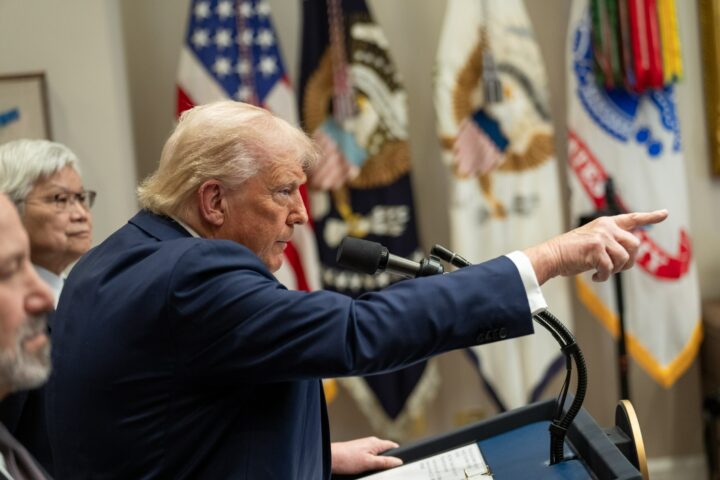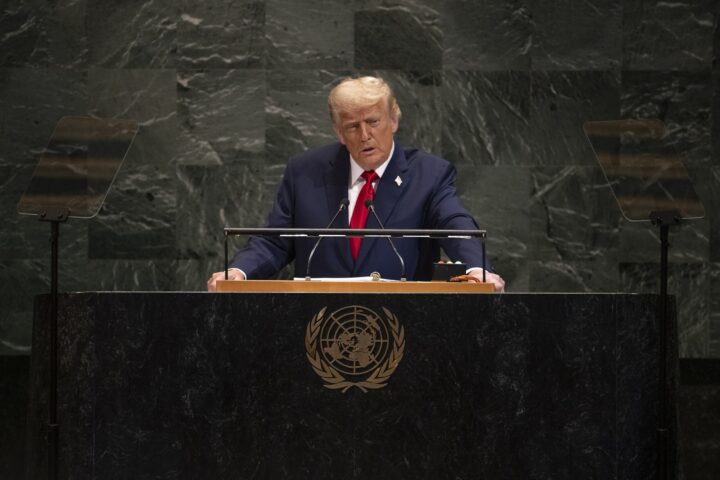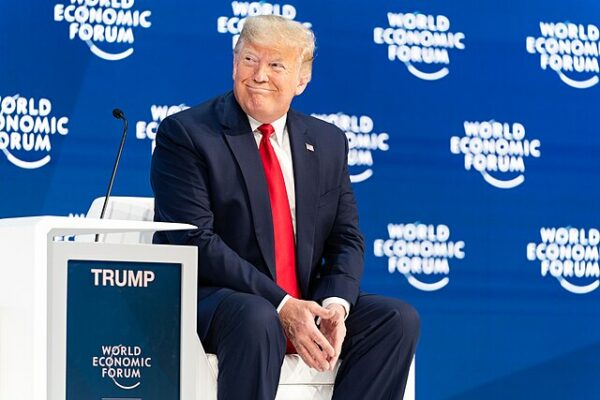
The scene inside Congress Hall at the World Economic Forum was already tense before U.S. President Donald Trump ever reached the podium.
CNBC reporter Spriha Srivastava, filing an eyewitness account from Davos, described an atmosphere defined by anticipation, celebrity, and unease as global elites crowded in for Trump’s highly anticipated address.
What stands out from the report is that love him or hate him, global leaders understand that Trump is in command of the world stage, and he has forced them all to reckon with a United States willing to defend its own interests.
Securing a seat, she reported, was itself an ordeal. Srivastava waited in line for more than 90 minutes outside the packed Congress Hall, where security was tight and capacity limits left many would-be attendees turned away. Even high-profile figures were not spared the wait. Steve Schwarzman, the CEO of Blackstone Group, stood in the same queue as everyone else under alpine winter conditions—a visible measure of the demand to witness Trump’s return to the Davos stage amid debates over artificial intelligence, geopolitics, and global markets.
WATCH IN FULL: President Donald J. Trump's address and interview at the World Economic Forum in Davos, Switzerland pic.twitter.com/RUM1NeyJr0
— Rapid Response 47 (@RapidResponse47) January 21, 2026
Inside the hall, the audience reflected the summit’s upper tier. Srivastava observed Tim Cook of Apple, Christine Lagarde of the European Central Bank, Ajay Banga of the World Bank, U.S. Secretary of State Marco Rubio, Commerce Secretary Howard Lutnick, Treasury Secretary Scott Bessent, and Canadian Prime Minister Mark Carney. Before the speech began, lighter moments cut through the tension—Cook sharing a tight hug with Banga, Lagarde exchanging warm greetings with European officials—small reminders of the clubby familiarity Davos still cultivates.
Trump entered to loud applause. Opening with a nod to the crowd, he said it was good to see so many friends and “some enemies,” drawing laughter before pivoting quickly to self-congratulation. He described himself as the most successful president and touted what he called the achievements of his first year back in office. “People are doing very well and are happy with me,” Trump said, prompting a mix of laughter and applause.
The address oscillated between humor and provocation. Trump took jabs at foreign leaders, including French President Emmanuel Macron’s eyewear—“What the hell was that?”—and directed remarks at Carney. Srivastava noted that a nearby CEO observed Carney responding with good humor, smiling and nodding through the exchange.
The most closely watched moment came more than an hour into the speech, when Trump turned to Greenland, an issue that had loomed over Davos due to his past threats to annex the Arctic territory. “Would you like me to talk about Greenland?” he asked, drawing an enthusiastic “yeah!” from some in the room, while others shook their heads or muttered in disapproval. “I am seeking immediate negotiations to once again discuss the acquisition of Greenland by the United States,” Trump said.
The mood shifted palpably. Srivastava reported one attendee whispering, “This is scary,” while a Danish person nearby dismissed the remarks as “ridiculous.” Trump pressed on: “So they have a choice. You can say yes, and we will be very appreciative. Or you can say no and we will remember.” For the first time, he added that he would not use force—a declaration that prompted what Srivastava described as a collective sigh of relief.
The address stretched well beyond an hour and concluded with a fireside chat with Børge Brende, president of the World Economic Forum. Some attendees began leaving early. As Srivastava exited, she spoke with several participants, capturing the unsettled aftertaste Trump left behind. A tech CEO said he wasn’t sure whether to laugh or feel nervous. A politician was more direct: “Yes, we laughed. But it’s also frightening to think he might actually try to execute some of this.”
From the line outside Congress Hall to the uneasy conversations afterward, Srivastava’s account painted Davos not merely as a stage for Trump’s agenda, but as a room caught between amusement and apprehension—entertained, alarmed, and acutely aware that the provocations delivered as spectacle may yet carry real consequences.