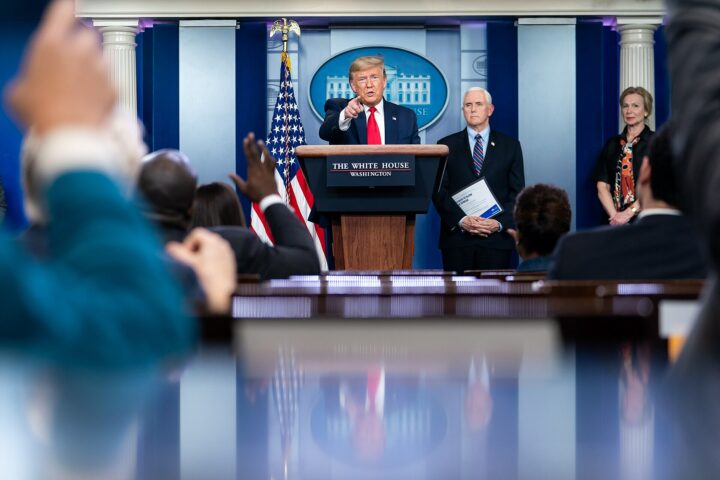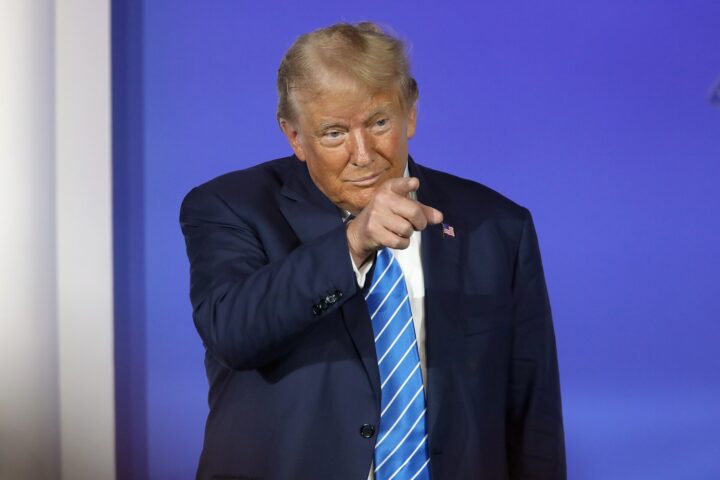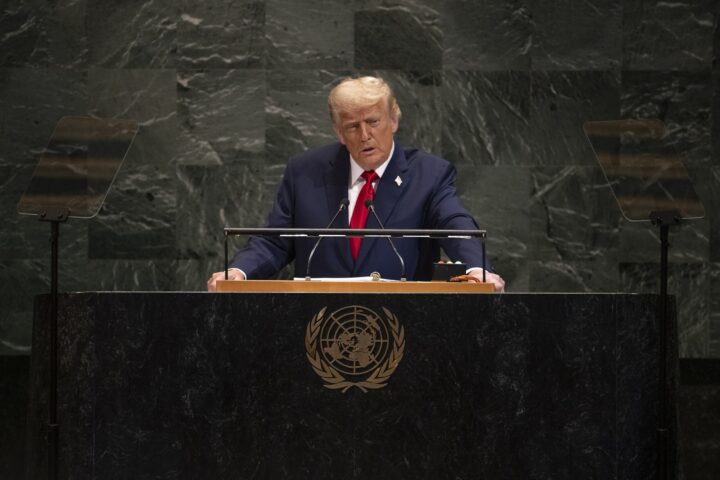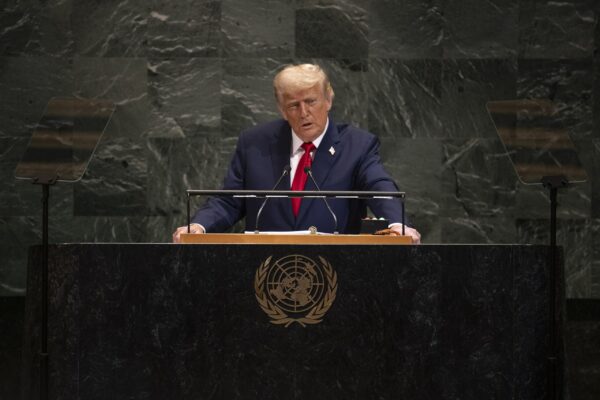
President Donald Trump used a high-profile appearance at the World Economic Forum on Wednesday to reaffirm his long-running interest in bringing Greenland under U.S. control—while explicitly ruling out the use of military force to achieve it. Speaking during a roughly 70-minute address in Davos, Trump sought to tamp down European fears that his administration might pursue coercive action against Denmark, even as he doubled down on the strategic necessity of acquiring the vast Arctic territory.
The president called for immediate negotiations with Denmark, arguing that the United States alone possesses the capacity to secure, develop, and defend the island. Trump framed Greenland as a critical geopolitical asset, asserting that only Washington could reliably safeguard “this giant piece of land, this giant piece of ice,” while casting the United States as a “great power” capable of improving the territory in ways Denmark could not.
Addressing concerns about possible aggression, Trump struck a familiar balance between reassurance and pressure. “If the U.S. decided to take Greenland by force it would be ‘unstoppable,’ but ‘I don’t want to use force. I won’t use force. All the United States is asking for is a place called Greenland,’” he said.
.@POTUS: "We never ask for anything, and we never got anything. We probably won’t get anything, unless I decide to use excessive strength and force, where we would be frankly unstoppable—but I won’t do that… All the United States is asking for is a place called Greenland, where… pic.twitter.com/G73psHvu62
— Rapid Response 47 (@RapidResponse47) January 21, 2026
He added that fears of an invasion were overblown, presenting the issue as a test of cooperation for Denmark and its allies—suggesting that willingness to engage would be remembered favorably, while resistance would not.
The remarks appeared designed to de-escalate alarm triggered by earlier statements in which Trump had refused to rule out military options. Still, he left little doubt that Greenland remains central to U.S. national security planning, particularly in the Arctic, where competition with rival powers has intensified.
Beyond Greenland, the president used the Davos stage to deliver a sweeping critique of Europe and NATO partners. He argued that the continent is facing profound challenges, including what he described as the largest wave of mass migration in history, and claimed that many European cities are “not even recognizable anymore.”
Trump also revisited historical themes, highlighting the U.S. role in World War II and asserting that without American intervention Europeans “would all be speaking German and little Japanese” today. He contrasted that legacy with what he portrayed as a renewed American economic dominance, declaring that inflation has been defeated and that the United States functions as the global engine of prosperity.
Energy policy featured prominently as well. Trump promoted oil production, dismissed renewable energy initiatives as the “green new scam,” and boasted about efforts to scale back wind energy infrastructure.
The address drew heavy attention at the forum, with crowds gathering to hear the president speak. Trump’s presence has dominated conversations in Davos, overshadowing traditional themes such as climate change, as European leaders quietly weigh the implications for transatlantic relations—including the risk of tariffs or trade pressure tied to the Greenland dispute. European officials have expressed unease in private, with some meetings reportedly marked by tension. The size of the U.S. delegation—one of the largest ever to attend the forum—underscored the stakes surrounding Trump’s agenda and ensured that Greenland, once again, sat at the center of global attention.