A federal agent reportedly shot and wounded a man in Minneapolis on Wednesday night, triggering hours of unrest and clashes between protesters and law enforcement just one week after a separate immigration-related shooting left a woman dead in the city.
According to a statement from Tricia McLaughlin, a spokeswoman for the Department of Homeland Security, federal agents were attempting to arrest a Venezuelan man who was in the country illegally during a targeted traffic stop around 6:50 p.m. McLaughlin said the suspect fled from agents, prompting a pursuit.
When the officer caught up with him, McLaughlin said the man began to resist and violently assault the agent. She said two additional individuals emerged from a nearby building and joined the attack, striking the officer with a snow shovel and a broom handle. Fearing for his life, the agent fired his weapon, striking the suspect in the leg.
McLaughlin said both the agent and the injured suspect were taken to the hospital. She added that the two other individuals accused of attacking the agent were taken into custody. City officials later said the man who was shot appeared to have non-life-threatening injuries. The condition of the agent was not immediately disclosed.
The federal account could not be independently verified at the time. The incident unfolded amid heightened tensions in Minneapolis following the fatal shooting of Renee Nicole Good by an immigration agent one week earlier.
City officials said Wednesday’s shooting occurred on the north side of Minneapolis in the 600 block of 24th Avenue North. At a news conference, Minneapolis Police Chief Brian O’Hara said his understanding was that a 911 call had come from a nearby residence. The caller reportedly said the man was running from immigration agents and driving toward the home.
Neighbors described seeing federal agents ordering people inside the house to come out with their hands raised. Several individuals, including children, were seen exiting the residence.
Minneapolis Mayor Jacob Frey said after the shooting that many details remained unclear but warned that the situation could not continue. He reiterated his call for Immigration and Customs Enforcement to leave the city, calling the ongoing operations unsustainable.
“This is an impossible situation that our city is presently being put in,” Frey said, adding that officials were trying to find a path forward that would protect residents and maintain order.
As news of the shooting spread, at least 200 protesters gathered near the scene Wednesday night. Demonstrators shouted at Minneapolis police officers who had blocked off the street, demanding that federal agents be arrested. Chief O’Hara said the crowd was engaging in unlawful behavior and urged people to disperse.
He said protesters threw fireworks at officers, prompting law enforcement to deploy gas at multiple points to regain control of the area.
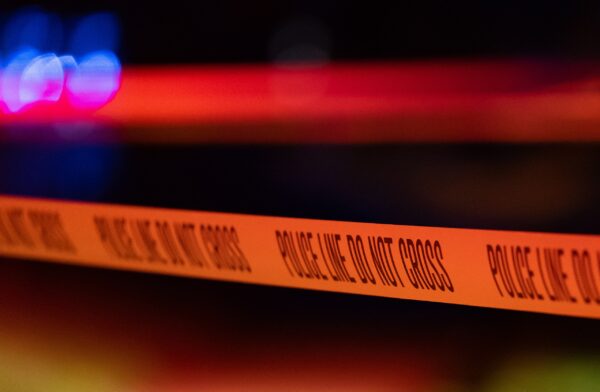
Several heavily armed U.S. Border Patrol agents arrived in a large, military-style vehicle near the crime scene tape. Protesters surrounded the vehicle, yelling and throwing snowballs at agents who exited. The agents eventually withdrew, firing at least two gas canisters as they retreated, producing loud bangs and causing breathing difficulties for some nearby.
Later, at least two ICE agents arrived in an unmarked SUV and sprayed chemical agents at protesters who approached them. One protester said he was temporarily unable to see. Fireworks were also fired toward retreating ICE agents and their vehicles.
Chemical agents were used multiple times, two people were detained and later released, and protesters damaged an unmarked vehicle equipped with police lights. A Minneapolis police supervisor told protesters he did not know exactly what had occurred, saying federal agents were not communicating with local authorities.
Federal Bureau of Prisons officers assisted with crowd control alongside state troopers. Chief O’Hara said he requested an investigation by the Minnesota Bureau of Criminal Apprehension, whose agents were present at the scene. That agency had previously been excluded from the Federal Bureau of Investigation inquiry into Good’s death.